Unpacking Nintendo's Genius: How a Playful Giant Redefined Gaming, Era After Era
Imagine a world where entertainment is confined, where interactions are predictable, and where the thrill of discovery is rare. Then, picture a company relentlessly shattering these boundaries, introducing novel ways to play, to connect, and to imagine. That, in essence, has been the trajectory of Nintendo for decades. From its humble beginnings in Kyoto to its current status as a global entertainment juggernaut, Nintendo has consistently proved that innovation isn't just about technology; it's about reimagining the very core of play. This article will embark on a fascinating journey through Nintendo’s history, examining how this iconic company has continuously led the electronic gaming industry in technological breakthroughs and revolutionary player experiences, much like how platforms like Pakwin777 provide a dynamic and constantly evolving environment for games such as Aviator.
Their story is not just one of consoles and cartridges, but of a philosophy that prioritizes fun and accessibility above all else. While other companies focused on raw power, Nintendo often pursued unique control schemes, whimsical game worlds, and social interactions, carving out a distinct niche that continues to resonate with millions. This unwavering commitment to novel experiences has allowed them to weather numerous market shifts, proving that true innovation transcends mere specs. Their approach mirrors the rapid, exhilarating changes found in modern games like Aviator, where adaptability and quick decisions are key to success.
How Did Nintendo's Early Innovations Lay the Foundation for Future Success?
Long before the era of high-definition graphics and online multiplayer, Nintendo was already a force to be reckoned with, albeit in a different form. Their journey into the electronic gaming industry began with the Famicom (known as the Nintendo Entertainment System or NES in the West) in 1983. This console wasn't just a toy; it was a cultural phenomenon that single-handedly revitalized a crashed video game market. Its success wasn't due to overwhelming technological superiority alone, but rather a combination of robust hardware, strict quality control over third-party titles, and groundbreaking games like Super Mario Bros. that defined genres and captivated audiences. The Famicom introduced the D-pad, a simple yet revolutionary input method that became the standard for precise 2D platforming. This period established Nintendo's reputation for creating intuitive, accessible, and incredibly fun gaming experiences, setting the stage for decades of industry leadership. This strategic entry into the market showcased their understanding of what players truly wanted: not just games, but engaging, reliable entertainment.
This foundational period highlighted Nintendo's unique DNA: an uncanny knack for distilling complex technology into user-friendly interfaces, prioritizing gameplay above all. They understood that a powerful machine was useless without compelling software, and their internal development teams, led by legends like Shigeru Miyamoto, consistently delivered titles that pushed creative boundaries. The NES, in many ways, was the starting block for the modern gaming industry, proving that home consoles could be a sustainable and wildly profitable entertainment medium. Its triumph demonstrated that sometimes, simplicity and exquisite design trump brute force and complex mechanics, a lesson that many in the technology sector still learn today.
What Role Did Handheld Gaming Play in Shaping Nintendo's Empire?
Just as the console war raged, Nintendo unveiled another game-changer: the Game Boy in 1989. While not the first handheld electronic game, it was arguably the most successful and influential. Its monochrome screen and relatively simple graphics belied a masterclass in design philosophy. The Game Boy emphasized portability, ruggedness, and incredibly long battery life, making gaming accessible anywhere, anytime. The killer app for the Game Boy was, of course, Pokémon, which launched a global phenomenon and demonstrated the immense power of connected handheld experiences. The Game Boy solidified Nintendo's dominance in the portable market, proving their ability to innovate across different form factors and anticipating consumer desires for on-the-go entertainment. This strategic move expanded their reach exponentially, reaching demographics previously untouched by home consoles.
The Game Boy's legacy extends far beyond itself, paving the way for every subsequent handheld device, including the Nintendo DS and 3DS. Each iteration built upon the core principles of accessibility and innovative gameplay, introducing dual screens, touch controls, and stereoscopic 3D without requiring special glasses. These handhelds often served as experimental grounds for new ideas that would later influence their home consoles, showcasing a symbiotic relationship between their different product lines. For instance, the touch screen innovation on the DS would later inform the Wii U's GamePad, illustrating a continuous flow of creative concepts across their hardware developments.

Photo by Patrick on Pexels
How Did Nintendo Challenge Conventional Wisdom with the Wii and DS?
In an era where competitors were locked in a race for graphical supremacy, Nintendo once again charted its own course with the Nintendo DS (2004) and the Wii (2006). These two platforms marked a pivotal shift, aggressively targeting a broader audience beyond traditional "gamers". The DS introduced dual screens and a stylus for touch input, opening up entirely new gameplay possibilities for titles like Nintendogs and Brain Age, which appealed to casual players and non-gamers alike. The Wii, with its revolutionary motion controls, literally got people off the couch and engaged in active gameplay, turning living rooms into virtual tennis courts and bowling alleys. Its intuitive interface and family-friendly appeal expanded the definition of who a "gamer" could be.
These consoles weren't about cutting-edge processors or hyper-realistic graphics; they were about innovative user interface and interactive design. The Wii's motion controllers removed barriers to entry, allowing anyone, regardless of gaming experience, to pick up and play. This focus on accessibility, combined with viral word-of-mouth, led to unprecedented sales figures and a lasting impact on popular culture. Nintendo proved that the next frontier in gaming wasn't just about making games look better, but about making them feel different and more inclusive. This bold departure from industry norms demonstrated a deep understanding of human interaction and entertainment.
What Makes the Nintendo Switch a Masterpiece of Hybrid Design?
The culmination of Nintendo's innovative spirit undoubtedly lies in the Nintendo Switch (2017). This groundbreaking console seamlessly merges the best aspects of home console and handheld gaming into a single, cohesive device. Users can play massive, graphically rich games on their TV, then instantly take the console off its dock to continue their adventure on the go, utilizing its built-in screen and detachable Joy-Con controllers. This hybrid design wasn't just a technical achievement; it was a profound reimagining of how and where people game. It solved the perennial dilemma of choosing between big-screen immersion and portable convenience.
The Switch's success is a testament to Nintendo's ability to learn from its past, incorporating the social play of the Wii, the portability of the Game Boy, and the rich first-party software library pioneered by the NES. Games like The Legend of Zelda: Breath of the Wild and Animal Crossing: New Horizons have redefined expectations for open-world exploration and community simulation, captivating millions worldwide. The Switch continues to evolve, demonstrating a versatility that keeps it relevant in a fast-paced market. It embodies the modern gaming ethos, offering flexibility and diverse experiences for every type of player, much like how Pakwin777 strives to offer versatile and engaging game experiences, including the unpredictable excitement of Aviator.
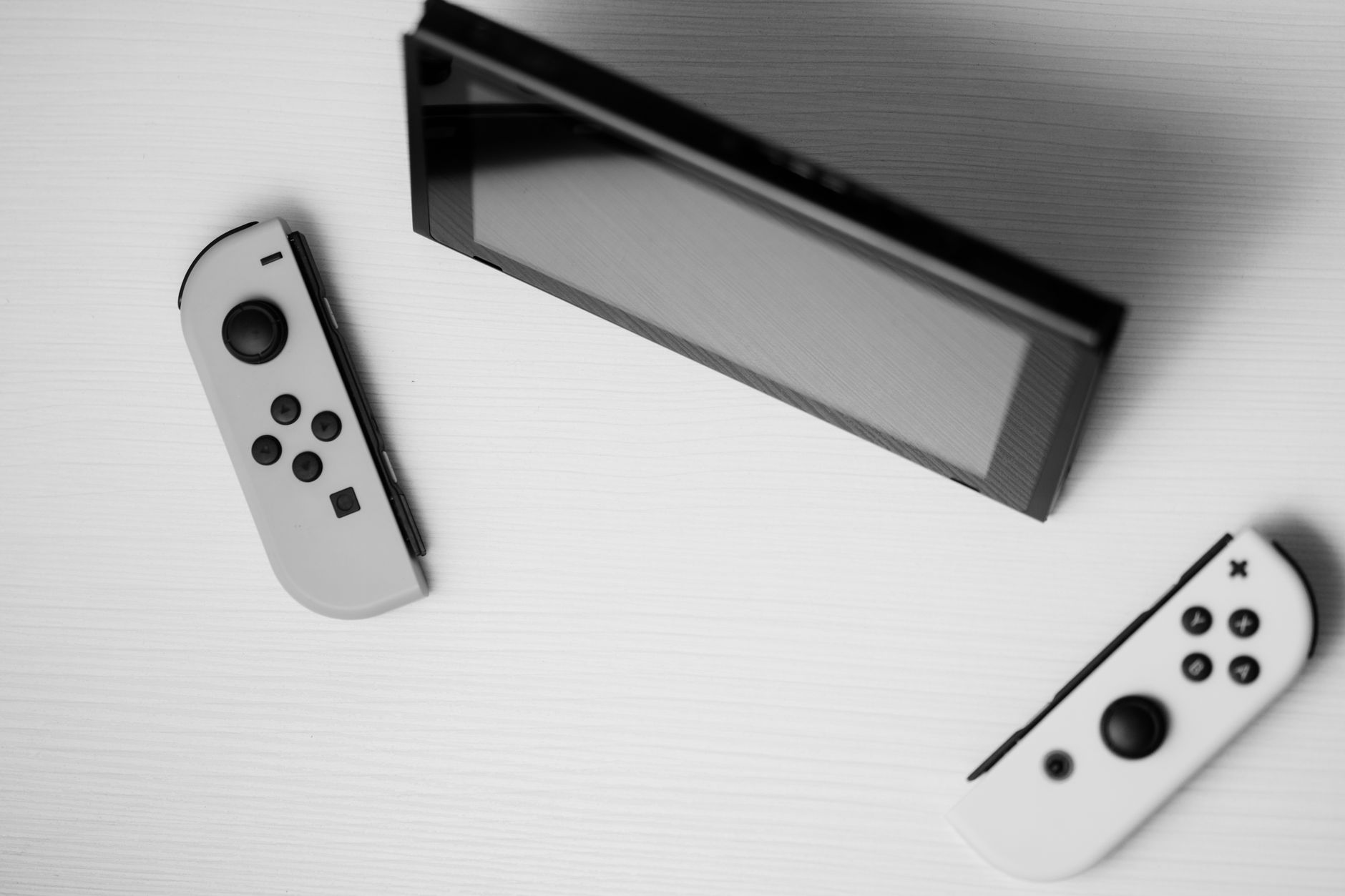
Photo by Arturo EG on Pexels
What Lessons Can Be Learned from Nintendo's Enduring Innovation?
Nintendo's journey is a powerful case study in sustained innovation and market adaptability. Their strategy has rarely been to compete head-on with rivals in terms of raw processing power. Instead, they continually seek out "blue ocean" strategies, creating new market spaces by focusing on unique experiences, control schemes, and user demographics. This approach allows them to differentiate themselves, stand out in a crowded market, and cultivate fiercely loyal fanbases. From the rotational play of their early arcade titles to the motion controls of the Wii, and now the hybrid nature of the Switch, Nintendo consistently challenges the status quo.
Their success isn't just about hardware; it's intricately linked to their unparalleled first-party software development. Iconic franchises ensure that their consoles always have compelling content, often serving as system sellers. This synergy between innovative hardware and captivating software is a hallmark of their brand. Moreover, Nintendo has shown a remarkable ability to pivot and learn from market failures, such as the Wii U, using those lessons to fuel the development of future successes like the Switch. This resilience and willingness to experiment are crucial traits for any brand aiming for long-term relevance in a dynamic industry.
How Does Pakwin777 Relate to This Spirit of Innovation?
Just as Nintendo revolutionized traditional gaming, platforms like Pakwin777 are carving out new niches in the online entertainment sector, particularly with games like Aviator. While different in nature, the core principles of delivering unique player experiences and adapting to evolving user preferences resonate strongly. Aviator, for example, moves away from conventional slot mechanics, offering a real-time, decision-based crash game where players must strategically cash out before the multiplier crashes. This requires quick thinking, risk assessment, and an understanding of probability, creating an engaging and dynamic experience unlike traditional casino offerings.
Pakwin777, as a data-driven hub, provides Aviator enthusiasts with the tools to master this volatility. They focus on technical breakdowns, RTP analysis, and strategy testing through demo environments, empowering players to make informed decisions. This commitment to player education and strategic advantage reflects a similar drive for innovation seen in Nintendo's product development – both aim to offer more than just a game, but an enriched, engaging experience. Understanding the mechanics of games like Aviator through insightful analysis helps players navigate the volatility with better information and calculated risks, mirroring Nintendo's emphasis on deeper engagement outside simply graphical prowess.

Photo by Vladimir Srajber on Pexels
The Future of Play: What's Next for Nintendo and the Industry?
As Nintendo continues its innovative trajectory, the future promises even more exploration into new forms of interactive entertainment. With cloud gaming, virtual reality, and augmented reality technologies constantly advancing, Nintendo is uniquely positioned to integrate these elements into their distinct vision of play, always with an eye towards accessibility and fun rather than just raw technological power. Their willingness to experiment, even if it leads to occasional missteps, ensures that they remain at the forefront of creative gaming experiences.
The industry as a whole is moving towards more personalized and social experiences, areas where Nintendo has historically excelled. From the shared joy of local multiplayer to the global communities built around their online offerings, Nintendo has always understood the social fabric of gaming. As new technologies emerge, we can expect Nintendo to leverage them in ways that enhance human connection and imaginative play, reinforcing their legacy as true pioneers in the world of video games. The constant pursuit of novel engagement and player-centric design ensures that Nintendo will remain a pivotal player for decades to come.
Frequently Asked Questions
Q: What is Aviator?
A: Aviator is a social multiplayer crash game where an increasing multiplier curve can crash at any time. It moves away from traditional slot mechanics to offer a real-time, decision-based experience. Players watch a plane take flight, and they must cash out before it disappears.
Q: How does Aviator work?
A: You place a bet and watch a plane take off with a rising multiplier. Your task is to click "Cash Out" before the plane flies away. If the plane disappears before you settle, your bet is lost, creating a high-stakes, instant gratification dynamic.
Q: Can I play Aviator for free?
A: Yes. Most licensed platforms offer a "Demo Mode" where you can use virtual credits to practice the timing and explore the interface without any financial risk. This allows players to familiarize themselves with the game's mechanics before committing real money.
Q: Is Aviator a slot game?
A: No, it is classified as a "Crash" or "Instant" game. It does not use reels, symbols, or paylines; instead, it relies on a single rising multiplier and player-controlled exit points, fundamentally differentiating it from traditional slots.
Q: Can I play Aviator on mobile?
A: Absolutely. The game is built on HTML5 technology, making it fully compatible with all modern smartphones, tablets, and desktop browsers. This ensures a seamless gaming experience across various devices, allowing play on the go.
Q: Is Aviator easy for beginners?
A: Yes. The rules are intuitive: watch the number go up and click before it stops. However, we recommend starting with the demo to get used to the speed of the flight and understand the game's volatility before playing for real stakes.
Q: Is there a strategy for Aviator?
A: While the outcome is random, many players use the "Double Bet" strategy—cashing out one bet at a low multiplier (like 1.5x) to cover costs, while letting the second bet run for higher gains. This strategy helps manage risk while still aiming for larger payouts.
Q: Is Aviator available everywhere?
A: Availability depends on your local gambling laws and the specific casino operator’s license. Always verify the legal status of online gaming in your region before playing to ensure compliance with local regulations.
Q: How do I know the game is fair?
A: Aviator uses "Provably Fair" technology. This means the result of each round is generated via a transparent cryptographic hash that any player can independently verify after the round ends, ensuring the integrity and randomness of each round.
Q: What is the maximum win in a single round?
A: The multiplier can technically reach 10,000x, but this is extremely rare. Maximum payouts are also subject to the specific limits set by the casino platform you are using, which can vary between operators.